-
 Call
-
 Location
Saudi Arabia
-
 Email
sales@therhinofloor.com



How to Clean and Maintain Industrial Floor Mats: A Complete Guide
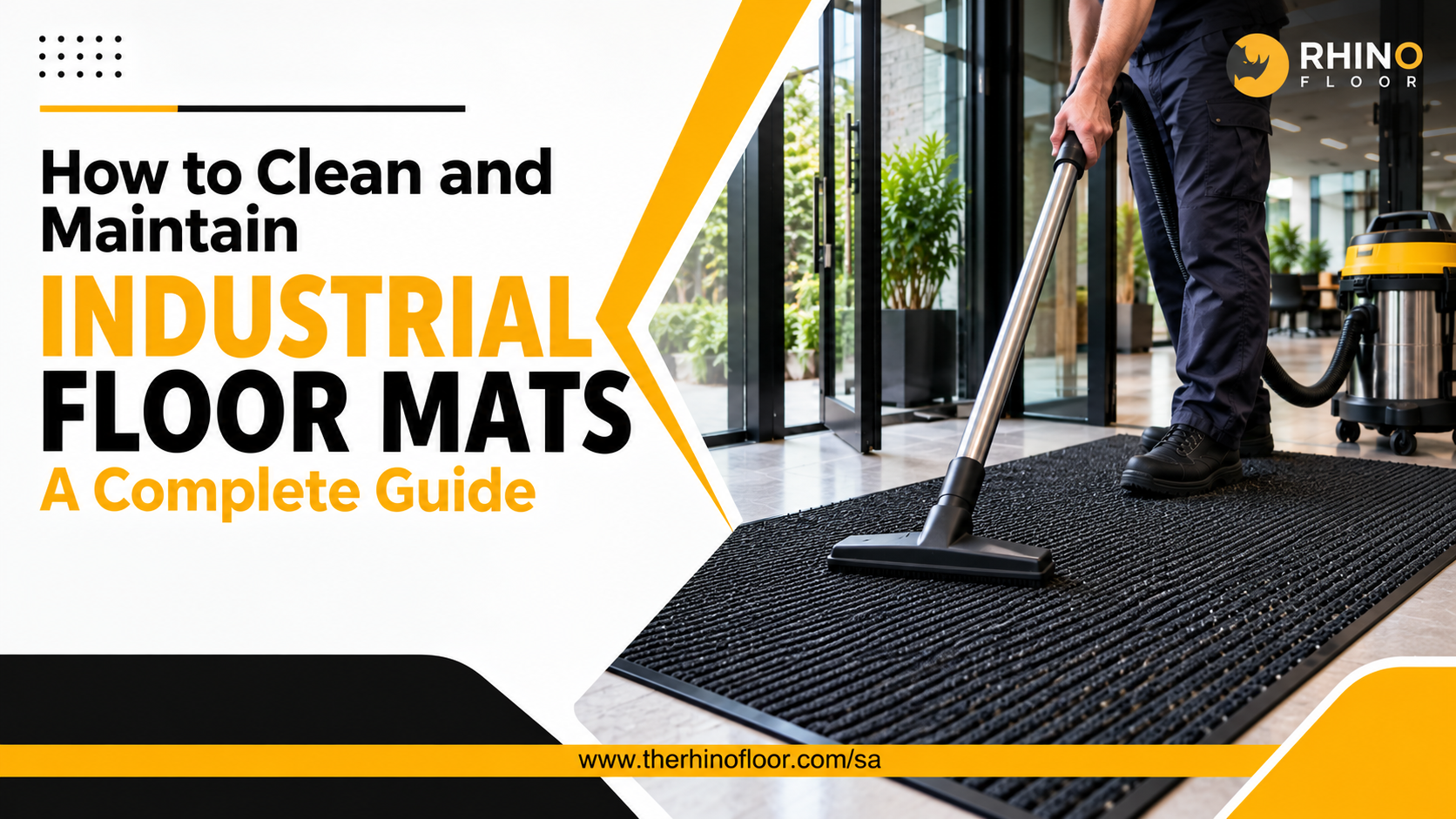
Your floor mats deal with a lot everyday. Muddy shoes, dust, water spills, stain, grease–they collect all kinds of dirt all while keeping the surroundings clean and safe. But even mats cannot escape the clutches of dirt. They start to smell, lose their effectiveness, and gradually become a burden.
The good news is you don’t need any complicated equipment or expensive cleaning products to clean industrial floor mats. With the right cleaning routine, you can easily keep them safe and ready for daily use.
So, how can you maintain industrial floor mats? Let’s find out.
Why Is It Important to Clean Industrial Floor Mats?
Where are floor mats placed? In workshops, kitchens, garages, factories, and commercial spaces where the foot traffic is high. As expected overtime dirt and moisture can build up dampening the mat’s effectiveness. Regular cleaning can be of real help as they:
-
Improve safety: Removes oil, water, stain, and loose dirt thereby reducing the risk of slips and falls.
-
Maintain hygiene: Regular cleaning removes the dust, food particles, and other unwanted debris preventing foul odour and bacterial buildup.
-
Extend mat’s lifespan: Proper care prevents early damage and tear.
-
Keep the area clean: Well-maintained mats adds to a more cleaner and organized space.
How to Clean Industrial Floor Mats Step by Step
-
Removes Loose Dirt and Debris
First things first, you should start by removing the mats from its position. Shake off the dust and loose dirt or use a brush or vacuum cleaner. For heavy-duty rubber mats it is better to use a broom or a suitable vacuum cleaner.
-
Use the Right Cleaning Solution
Now mix a mild detergent or the ones advised by the manufacturer, with water and use a soft brush or mop to clean the mat’s surface. It is better if you avoid strong chemicals unless the manufacturer clearly specifies so. This is crucial because certain chemicals can severely damage rubber, discolour the surface or affect the mat’s grip. So make sure to use a cleaner that is compatible with the mat’s material.
-
Scrub Away the Stubborn Dirt
Kitchen floors mats often have stuck-on dirt, grease, or grime. You can gently scrub the surface with a suitable brush. But make sure you pay extra attention to the textured surfaces, drainage holes, and grooves where dirt mostly accumulate. That being said, aggressive scrubbing can damage the mat, so be gentle while doing so.
-
Rinse Thoroughly
The next step is rinsing. You can wash the mat to remove loosened dirt, if the material and cleaning instructions allow it. Make sure you wash it thoroughly enough to clean off the soap residue otherwise it can leave the surface slippery. Always maintain a moderate water pressure to prevent any damage.
-
Let the Mat Dry Completely
Let’s face it, it takes time for the mats to dry completely. While the obvious tendency to put the mat back while it’s still wet can surface up, well, don't fall for it. It is important that you air dry the mat in a well-ventilated area. You should also check the drainage holes and textured underside of the mats, if any, and ensure it is dried as well. Dampened mats can trap moisture and lead to slipping concerns. So to put it in simple terms, let it dry completely.
How Often Should You Clean Industrial Floor Mats?
Well, there is no fixed cleaning schedule for mats, because it often depends on the workspace, the frequency of foot traffic, and the type of dirt it collects. So to give a general guidance:
-
Daily: You can remove the loose dirt and check for spills.
-
Weekly: Clean the mats more thoroughly, especially in areas with moderate foot traffic.
-
Periodically: Inspect the mats for wear, damage, and loss of traction.
-
As needed: Clean immediately after oil or grease spills, heavy soiling and other contamination that cannot wait until the next hour.
Always remember to follow the manufacturer’s care instructions while cleaning .
Common Mistakes to Avoid When Cleaning Floors
So now you have understood why you should clean and how you should clean. Just like how we learn what to do, we should also know what not to do. These are some of the common mistakes you should avoid while cleaning floor mats:
-
Using harsh chemicals that can damage the surface.
-
Skipping the rinsing part that leaves soap residue creating a slippery surface.
-
Putting mats back before they are fully dried.
-
Ignoring grease and oil.
-
Overlooking the damaged edges.
Conclusion
Yes, keeping your industrial floor mats clean doesn’t have to be a do or die situation. A little regular cleaning, the right products, and proper drying can help to keep your mat in a good condition for a long period. You should also check for wear and tear, because even a clean mat needs replacement if damaged.
It is better to conduct regular cleaning instead of waiting until the dirt and grime is built up. This will help you keep the floor mats clean, safe, and ready for daily use.